Here is a quick guide to segmenting subscribers to a mailing list: you’ll be able send more effective messages and generate more conversions
Segmenting a mailing list will increase opening rates, decrease unsubscribes, and reduce the risk of being reported for spam. It’s
an essential practice for achieving success in
email marketing.
So what does it mean to segment a mailing list and why is it so important?
What is segmentation?
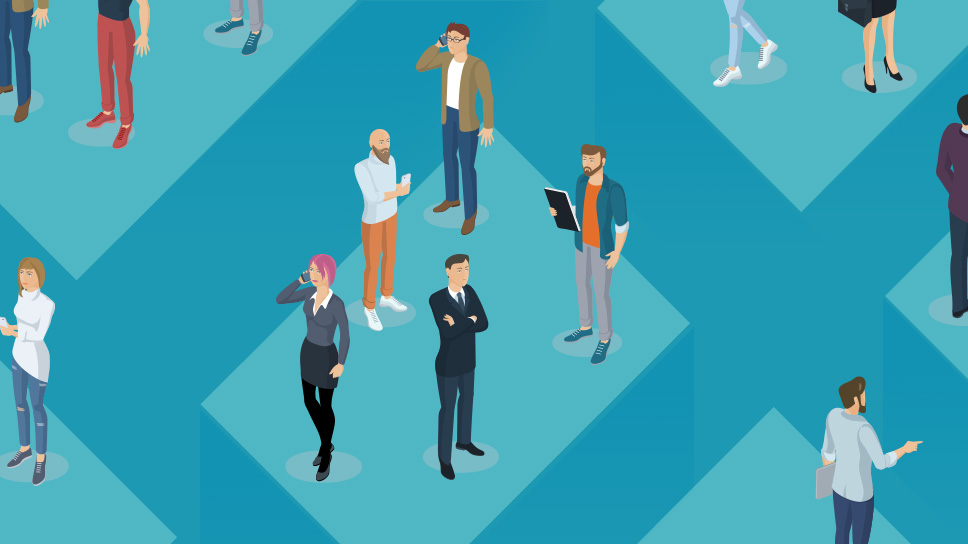
Segmentation is the
division of subscribers to a mailing list into smaller group called
segments. This process can be based on very different criteria: gender, age, behaviors, etc. If you want to deliver
more relevant email to your subscribers, here’s the first step: you have to create personalized contents for a specif segment.
A
Consumer Electronics Retailer might use segmentation, for example, to create lists within their email subscribers for men and women; then he might add several interest-based segments such as appliance, fitness, beauty, TV, computer, video game and drones to create relevant email campaigns.
Why create one or more segments from a mailing list
To
create an effective email campaign and
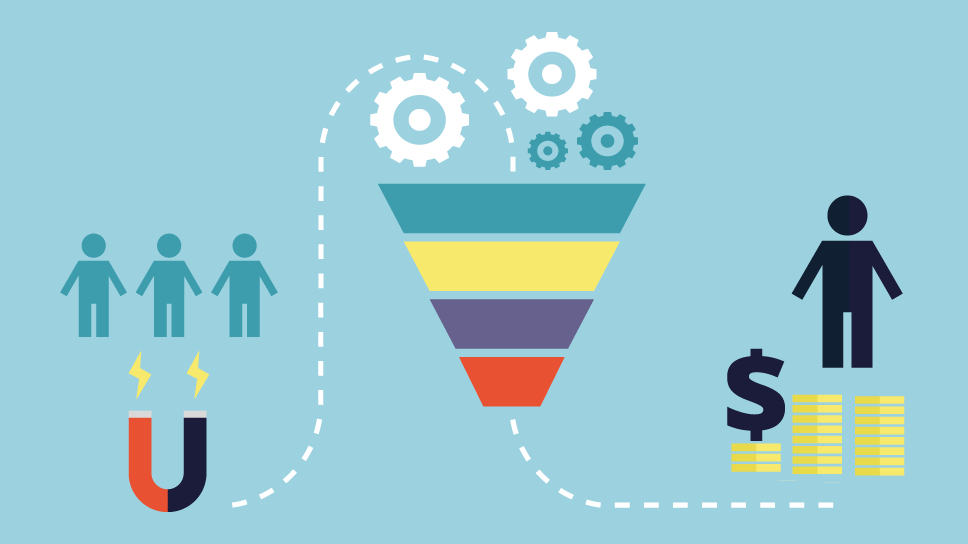
generate conversions, you need to send precise messages that are as personal to the reader as possible. You have to leverage the needs of each potential customer.
After identifying your target and segmenting the list, you will be able to create
tailored campaigns that will:
- Increase the opening rate of your emails;
- Lower the unsubscribe rate;
- Reduce spam reports;
- Deliver a higher click-through rate on the CTA and links;
- Produce the highest probability of retaining the subscriber.
Examples of mailing list segmentation
There are various ways to segment a mailing list. Here are some examples.
Segmentation by demographic
One of the most common approaches is to segment a list based on your
contacts’ demographics: their age, gender, work, etc.
These are very simple elements to identify but they let you create highly targeted campaigns.
An
e-commerce company, for example, could create different newsletters based on age or gender. An email addressed to a female reader could promote beauty products or personal care. It would
generate more conversions than an email sent to everyone and offering generic products.
Segmentation by location
Segmentation by
geographical location can be very useful, especially for a company that has multiple outlets in different areas.
A
chain of stores, for example, that wanted to organize an event or launch a promotion in a specific region, could send email campaigns only to the contacts in that specific area.
Segmentation by user behavior
Tracking the
behavior of users lets you launch ad hoc campaigns and create very specific segments.
One common example is to create a list of users
who have abandoned their shopping carts. These are people who have put a product in their carts but haven’t completed the purchase.
For this subgroup, autoresponders can send reminders to
complete the purchase.
Segmentation by time order and user status
You can also
separate new users from long-term customers. Those who have just come into contact with your business will know less about your products or services than those who have used it for years. They’ll benefit from different emails. The most complete and detailed information will be sent to newbies, while leaner emails with less explanation can go to the most experienced users.
In addition, a regular customer should receive
different promotions from those who have yet to show their
loyalty.
Segment a mailing list with Emailchef
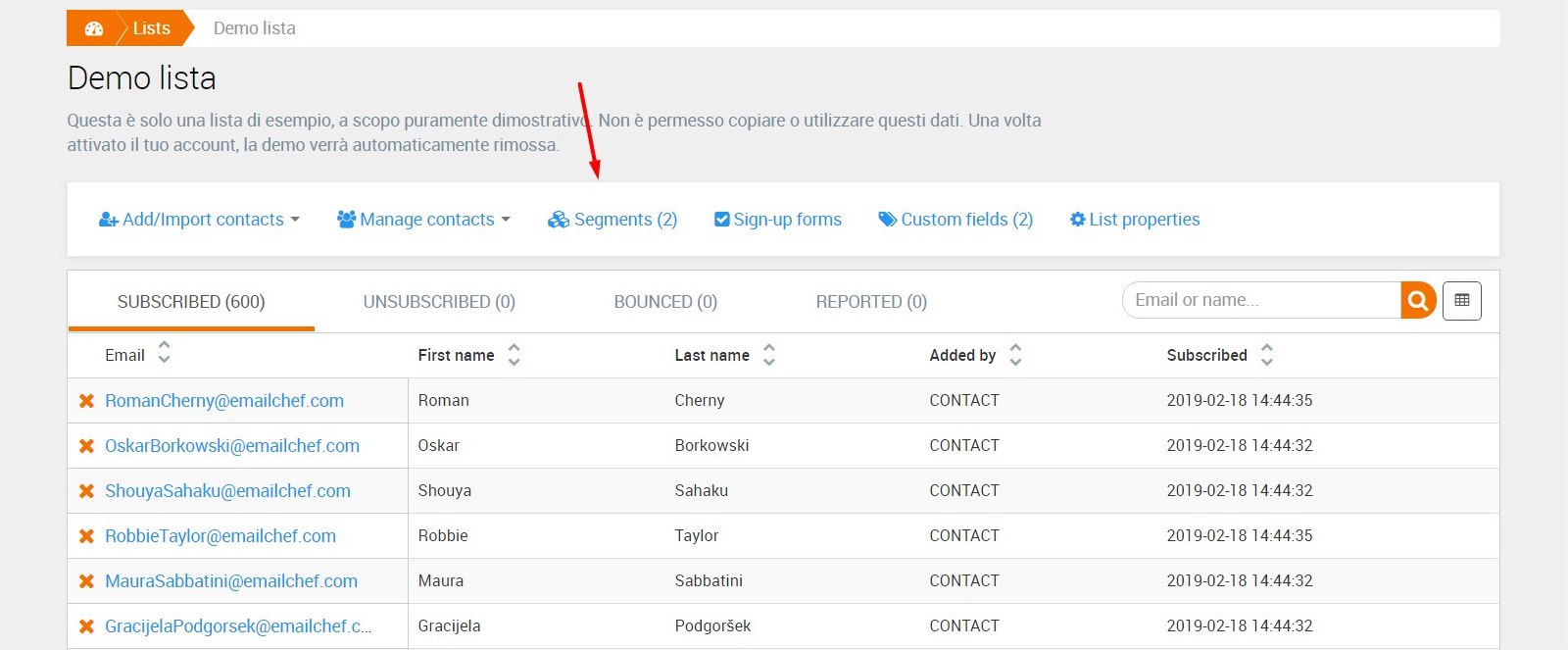
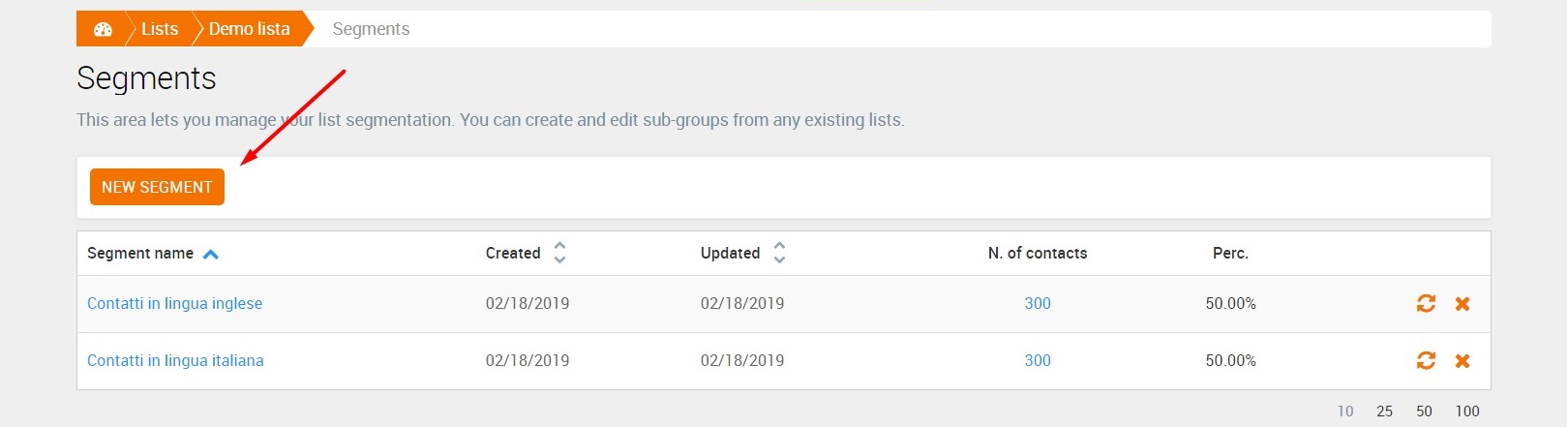
With Emailchef, segmenting a mailing list is really simple. It takes just a few steps:
- Choose one of the lists you have uploaded and select the “Segments” category
- Click the “New Segment” button
- Create a name and description for the new segment
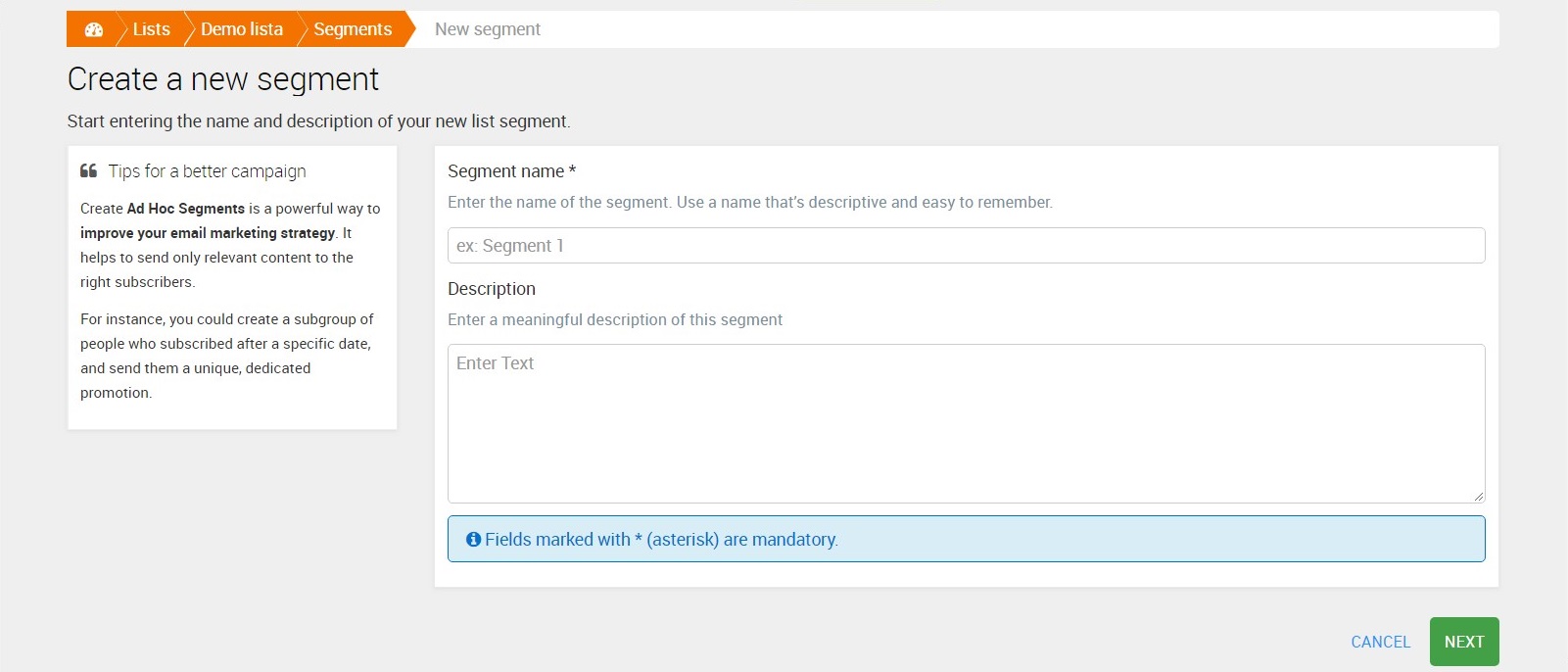
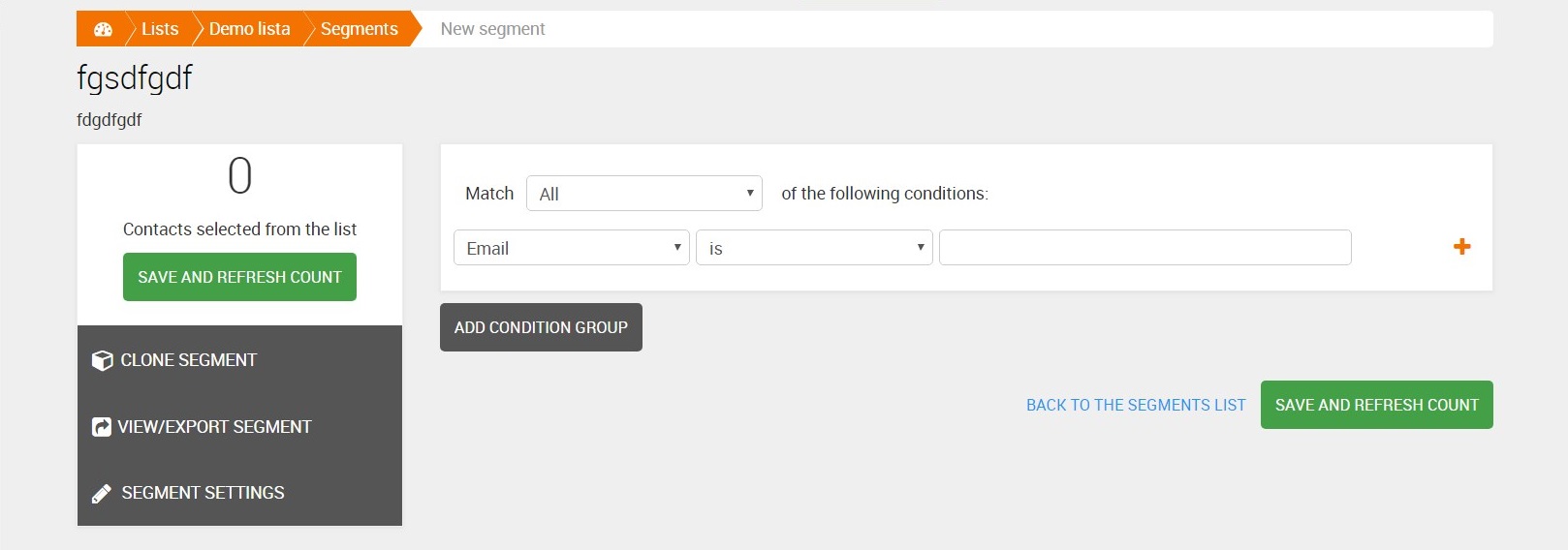
- Choose the parameters to select the contacts on your list and… you’re done!
Segmentation and many other email marketing services are available to everyone thanks to the constant work of our technicians and experts.
Register now and
try Emailchef for free. Email marketing has never been so easy!
TRY EMAILCHEF FOR FREE